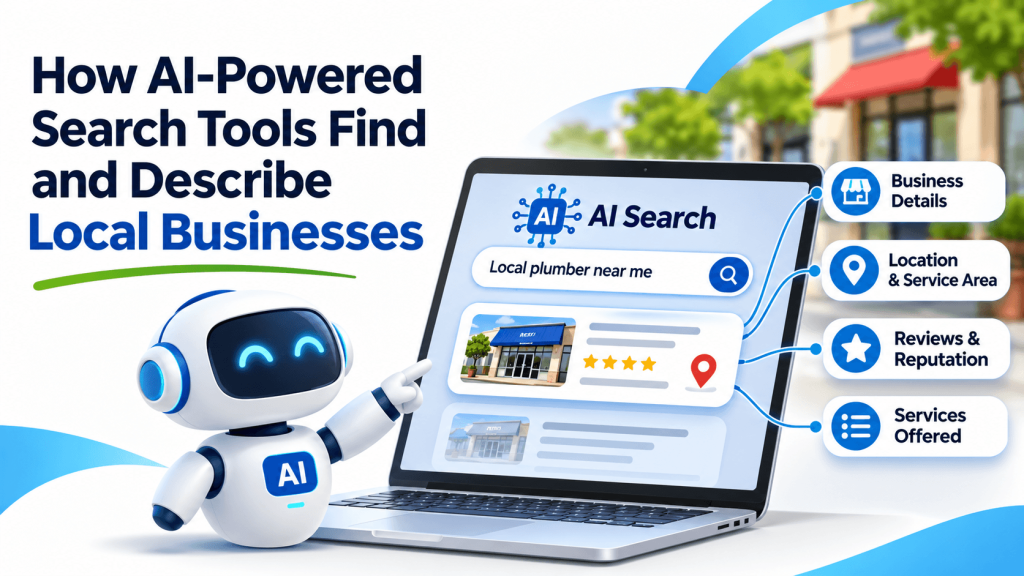
More customers now type full questions into AI assistants and search features, such as “Who does same-day HVAC repair near me?” or “Which bakery in town makes gluten-free birthday cakes?” Instead of ten blue links, they often get a short written answer that names a few businesses.
Business owners naturally want to know how those answers are put together and whether there is anything practical they can do about it.
What AI Answers Draw On
AI search tools generally combine information from web pages, business profiles, reviews, and other publicly available sources. Each platform works differently, and most do not publish exactly which sources they rely on for local recommendations.
What is clear is that these systems need information they can read and confirm. A business with a detailed website, an accurate Google Business Profile, and consistent listings elsewhere gives an AI tool more trustworthy material to summarize than a business with a bare homepage and scattered, outdated details.
Write Content That Answers Real Questions
Answer engine optimization, often called AEO, is mostly about clarity. Think about the questions customers ask on the phone and answer them plainly on your website. A bakery might add a page explaining which items are gluten-free, how much notice custom orders need, and whether delivery is available.
Use straightforward headings, short paragraphs, and specific facts such as service areas, hours, and pricing ranges where you are comfortable sharing them. Vague marketing language gives an AI tool little to work with.
Keep Your Business Information Easy to Verify
AI tools can repeat mistakes they find online. If one directory still shows your old hours, that error could appear in an answer. Review your key profiles regularly and correct anything outdated.
A complete profile in a well-organized business directory is one more public, structured record of who you are, what you do, and where you are located. Marketing firms that help clients with this work can be found in the advertising and marketing category on The Zoom Listing, which is useful if you would rather hand the task to a specialist.
Encourage satisfied customers to leave honest reviews that mention the specific service they received. Detailed reviews help people, and they also add useful context about what your business actually does.
Conclusion
No business can control how an AI tool phrases its answer, and no listing or technique guarantees you will be mentioned. You can make your information clearer, more complete, and more consistent. Start with your website’s most common customer questions, then confirm your details on your Google Business Profile, The Zoom Listing, and the other directories where customers find you.
Frequently Asked Questions
Is AEO different from regular SEO?
They overlap heavily. Both reward helpful, accurate content and a trustworthy online presence. AEO puts extra emphasis on direct, clearly structured answers to specific questions, because AI tools often summarize information rather than simply list pages. Good SEO habits remain the foundation for both, so you rarely need a separate strategy.
Can I pay to be recommended by an AI assistant?
Some platforms may offer advertising options, but organic AI answers are not something you can simply buy. Your best approach is to keep your website and profiles accurate, publish genuinely useful information, and earn honest customer reviews over time. Be cautious of anyone selling guaranteed AI placement.
Should I add an FAQ page to my small business website?
Yes, if it answers questions customers really ask. Keep each answer short and specific, and avoid repeating the same keywords. A useful FAQ page helps visitors make decisions faster and gives search tools clear, well-organized information about your services. Update it when your services or policies change.
What should I do if an AI tool shows wrong information about my business?
Find and fix the likely source first, such as an outdated listing, an old page on your website, or an incorrect profile. Many AI platforms also offer a feedback option on answers. Correcting the underlying public information is usually the most reliable fix.