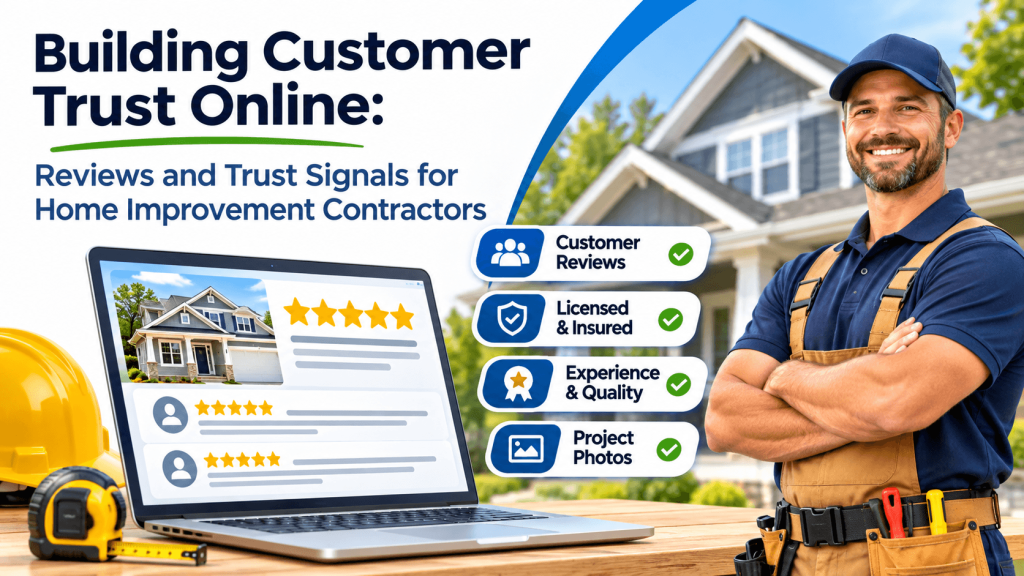
Before a homeowner lets a contractor into their house to remodel a kitchen or replace a deck, they want reassurance. They read reviews, look at photos of past projects, and check whether the company appears legitimate.
For home improvement businesses, trust is often decided before the first phone call. The good news is that most trust signals are within your control.
What Homeowners Look for Before They Call
Homeowners usually want proof of three things: you do quality work, you show up when promised, and you are a real, established business. Reviews speak to the first two. Clear business information, licensing details where they apply, a physical address or defined service area, and a professional website speak to the third.
Detailed reviews carry more weight than short ones. A review that says “They replaced our rotted deck boards in two days and cleaned up every nail” tells a future customer far more than “Great job.”
Asking for Reviews the Right Way
The simplest approach is to ask every satisfied customer at the end of a project and send a direct link afterward. Make it easy, but never pressure customers or offer rewards in exchange for positive reviews.
The Federal Trade Commission’s final rule on fake reviews and testimonials prohibits practices such as buying fake reviews and suppressing negative ones. Honest feedback, including the occasional critical review handled well, looks more believable to customers than a perfect record.
Show Your Work Across Your Online Profiles
Before-and-after photos, short project descriptions, and the services you actually offer should appear on your website and in every profile you manage. Keep your business name, phone number, and service area identical across them.
A listing on a general business directory gives homeowners another place to confirm you are established. Homeowners browsing the home improvement services listings on The Zoom Listing can see a contractor’s website, contact details, and opening hours in one place, which makes comparing options easier.
Respond to reviews, especially negative ones, calmly and specifically. Explain what you did to resolve the issue. Future customers often judge you by your response as much as by the complaint.
Conclusion
Trust online is built the same way it is offline: steady, honest work that people are willing to talk about. Make it easy for happy customers to leave reviews, show real examples of your projects, and keep your details consistent on your website, your Google Business Profile, and directories such as The Zoom Listing.
Frequently Asked Questions
Can I offer a discount to customers who leave a review?
Offering incentives only for positive reviews is deceptive and can violate FTC rules. Some platforms also prohibit any incentive for reviews at all. The safest approach is to simply ask satisfied customers for honest feedback and make leaving a review as easy as possible.
Should I post my contractor license number online?
If your state or trade requires a license, displaying the license number on your website and profiles can reassure homeowners and lets them verify it with the licensing board. Make sure the number is current and matches the business name customers see.
What is the best way to reply to an unfair review?
Stay calm and stick to facts. Thank the reviewer, briefly explain your side without arguing, and offer to discuss it offline. If a review clearly violates the platform’s rules, such as a review from someone who was never a customer, use the platform’s reporting process.
Do photos of past projects help win more jobs?
They often help, because remodeling decisions are visual. Real photos let homeowners judge your finish quality and style. Add a short caption describing the project, its location by city, and the problem you solved so the photo tells a useful story.